There Has Always Been a Question
What actually helps people move forward?
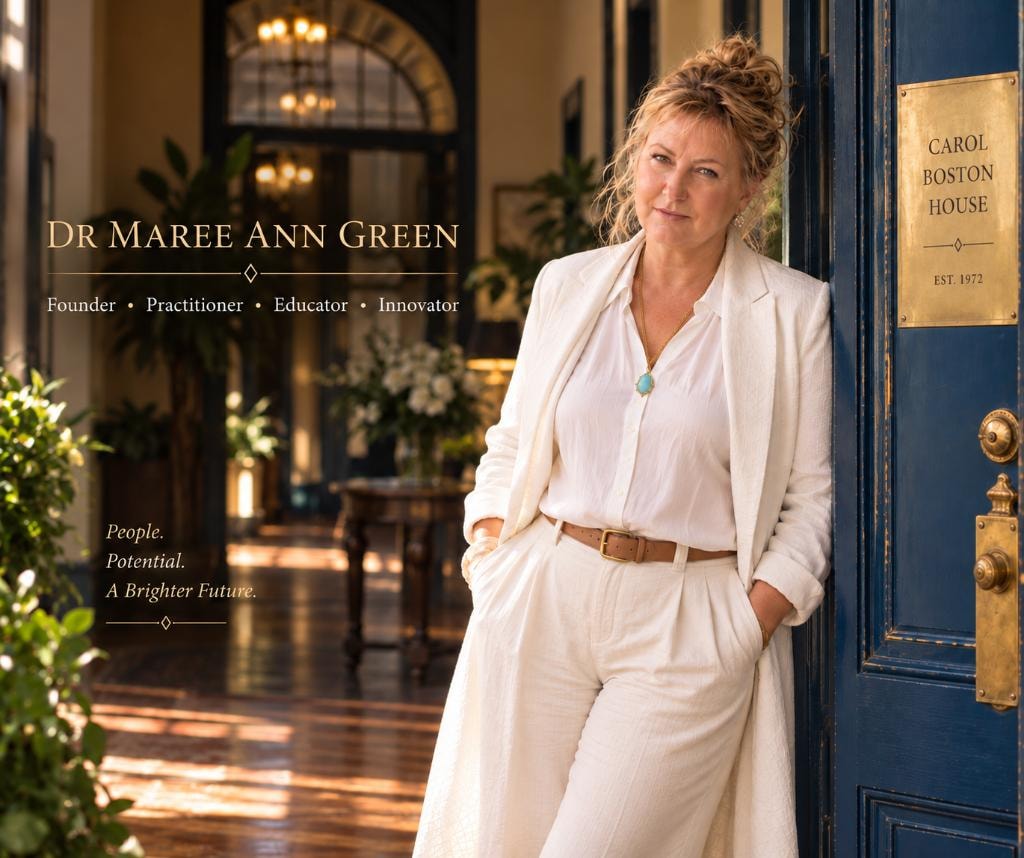
That question has shaped every stage of Dr Maree Ann Green's career — from her earliest work with individuals navigating complex circumstances, through decades of practice, teaching and research, to the development of a therapeutic approach that did not yet exist when she first needed it.
It is not a rhetorical question. It is a working one — returned to constantly, tested against experience, and never considered fully answered.
I
The Practitioner
Dr Green's practice has always been grounded in direct work with people. Over many years she has worked across a wide range of settings — community, clinical, educational and organisational — with a consistent focus on what is actually happening for the person in front of her.
Much of that work has involved trauma. Not as a category or a diagnosis, but as a lived reality that shapes how people think, relate, learn and function. Her approach has never been to apply a fixed method and observe the results. It has been to understand what is needed and to find — or develop — what works.
That orientation toward genuine effectiveness, rather than procedural compliance, has defined her practice from the beginning.

II
The Educator
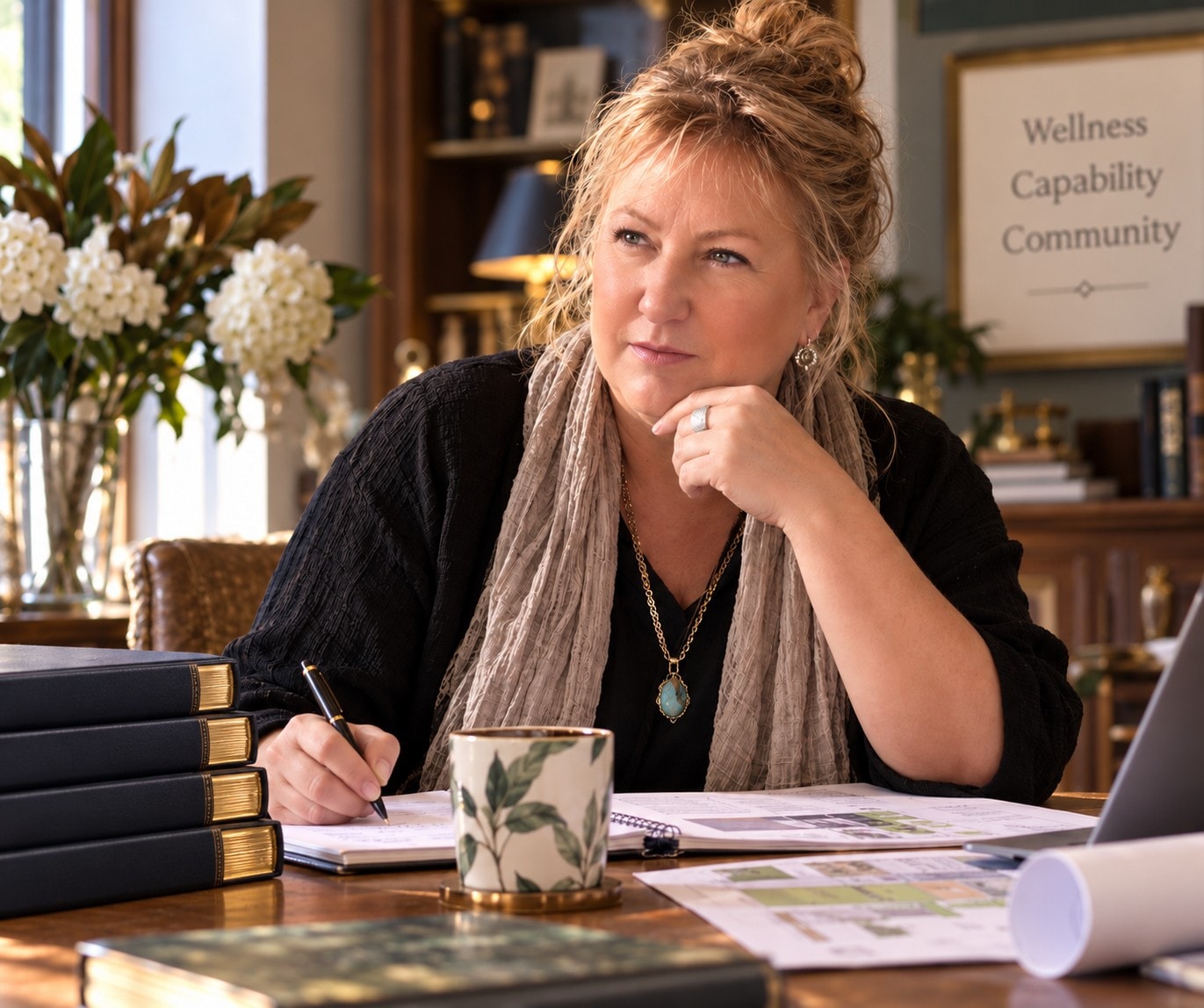
Alongside her practice, Dr Green has worked extensively in professional education — teaching, mentoring and supervising students at university level across a range of disciplines.
Her interest in education is not primarily about the transmission of knowledge. It is about the development of real professional capability: the capacity to think clearly under pressure, to hold complexity without collapsing it, and to work with people in ways that are genuinely helpful rather than merely procedurally correct.
She has observed, across many years of supervision and mentoring, that the gap between qualification and confident independent practice is one of the most consequential and least well-addressed challenges in the helping professions. That observation has directly shaped the work of the Centre.
III
The Innovator
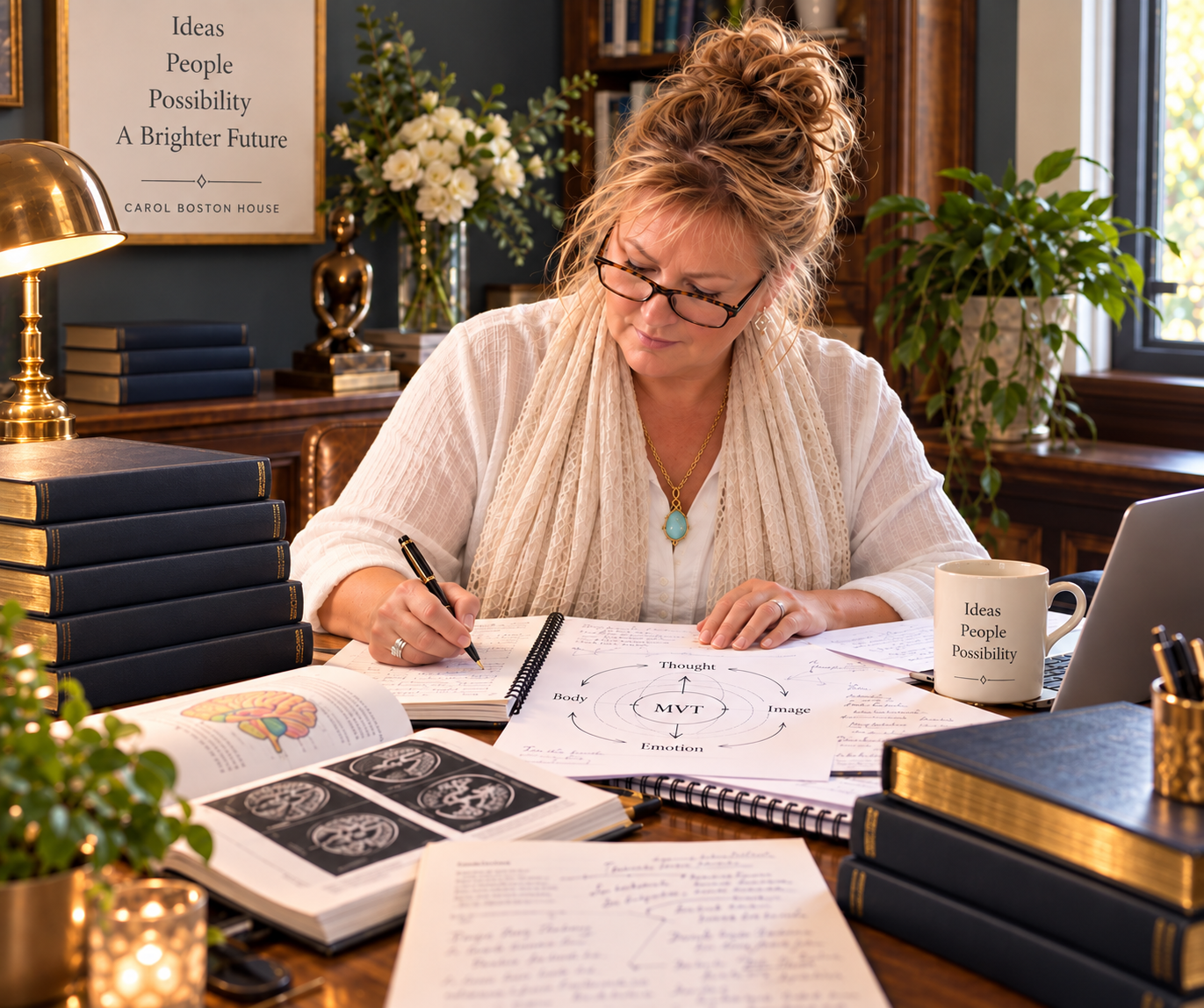
Matrix Visualisation Therapy® did not emerge from a theoretical exercise. It emerged from practice — from years of careful observation, from noticing what existing approaches did not adequately address, and from a sustained commitment to developing something that did.
MVT is a structured therapeutic approach that works with the way the mind organises experience — particularly in the context of trauma, complex presentations and situations where conventional talk-based approaches have reached their limits. It is evidence-informed, practically grounded and designed for use by trained practitioners across a range of professional contexts.
Its development has been iterative, disciplined and ongoing. Dr Green continues to refine and extend the approach, informed by practice, supervision and the work of practitioners she has trained.
IV
Mém Aree's Specialist Centre™
The Centre was established to bring together the strands of Dr Green's work into a coherent whole: wellbeing practice, professional capability development, learning and community participation.
It is not a clinic, a training provider or a community organisation in the conventional sense of any of those terms. It is an attempt to create something more integrated — a place where the connections between individual wellbeing, professional development and community life are taken seriously and built into the structure of the work.
The Centre operates as a registered not-for-profit organisation, DGR endorsed and ACNC compliant. Its work is guided by the principle that genuine capability — in individuals, practitioners and communities — is built through sustained, thoughtful engagement rather than short-term intervention.
V
A New Chapter
Carol Boston House, Moree NSW
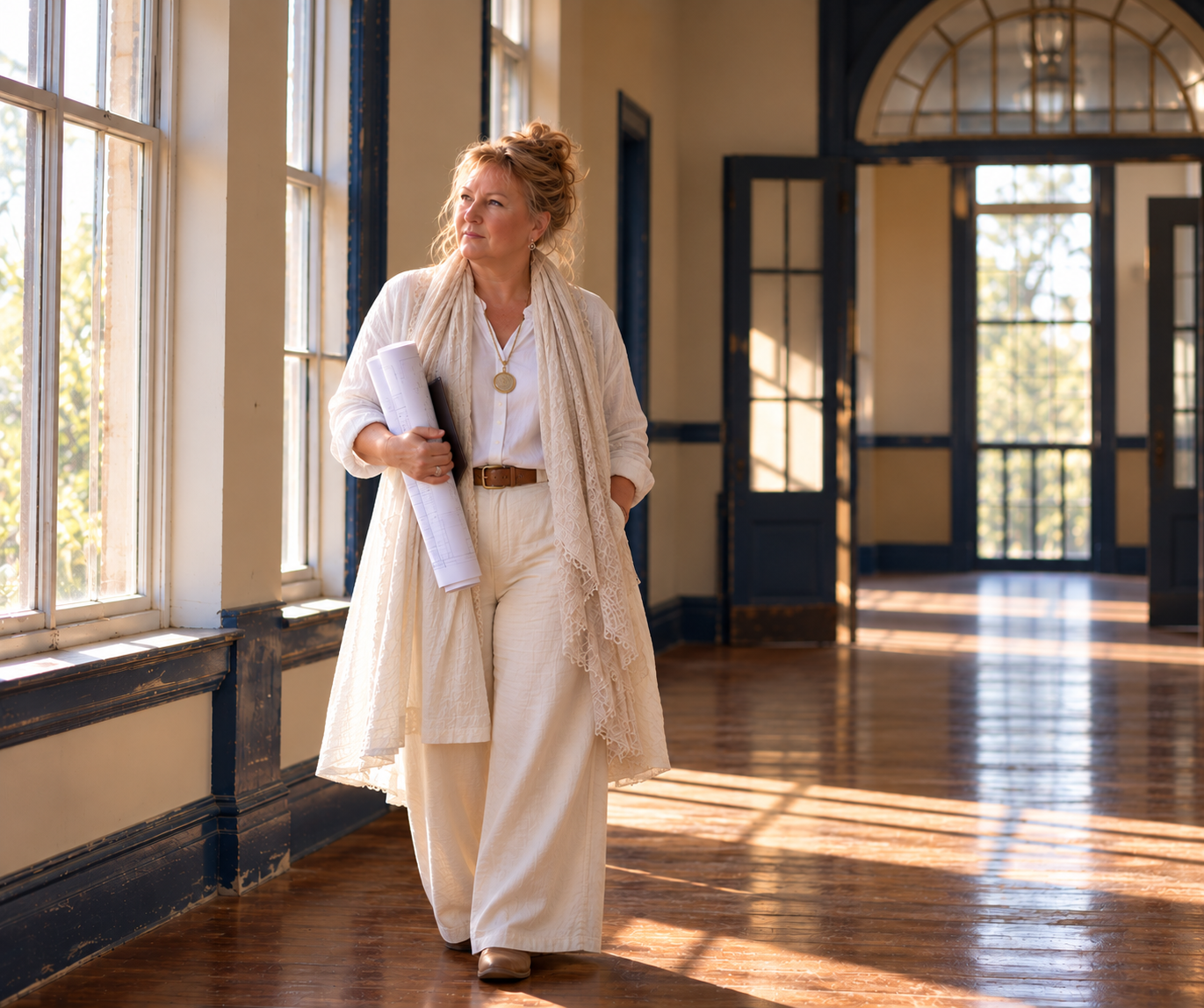
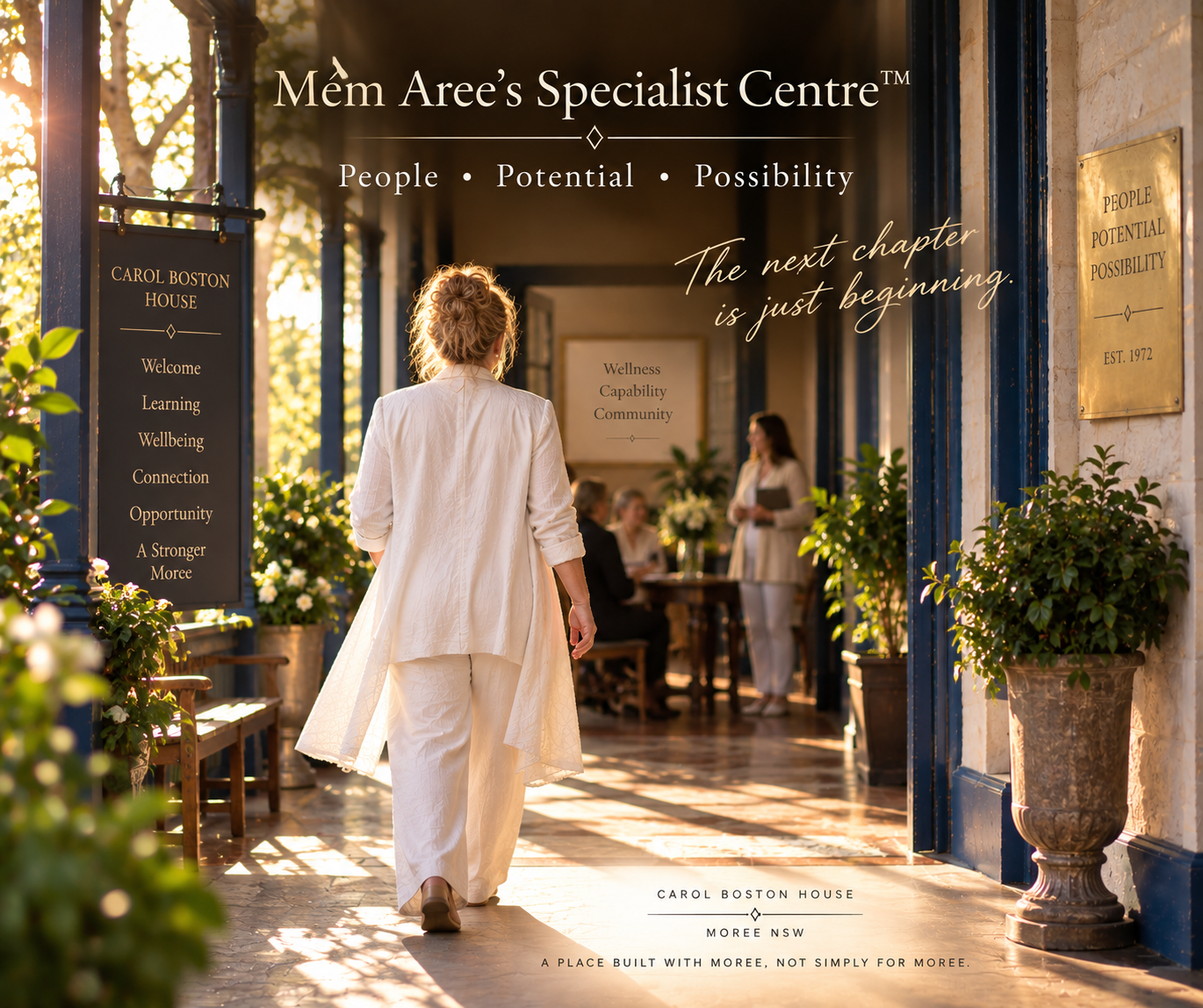
In Moree, New South Wales, a former school is being prepared for a new life.
Carol Boston House is the Centre's emerging physical home — a substantial heritage property that will bring together the full range of the Centre's work under one roof. The development of the site is being approached with the same care and deliberateness that characterises everything the Centre does.
The vision for Carol Boston House is organised around three interconnected principles: Wellness. Capability. Community.
It will provide space for therapeutic practice, professional training, community programs and the ongoing development of MVT. It is, in every sense, a long-term project — one that reflects a commitment to building something durable rather than something quick.
Wellness
Capability
Community
VI
Building Capability
One of the Centre's core commitments is to the development of professional capability in the communities it serves — particularly in regional and rural areas where access to specialist training and supervision has historically been limited.
This means working not only with individuals seeking support, but with the practitioners, educators and community workers who serve them. It means investing in the conditions that allow good professional practice to take root and sustain itself over time.
VII
The Next Generation of Practitioners
Practitioner Incubator — Building Local Professional Capability
The Practitioner Incubator is one of the Centre's most distinctive initiatives. It is designed to address a gap that Dr Green has observed throughout her career in professional education: the distance between completing a qualification and being genuinely ready for independent practice.
The Incubator provides a structured bridge — combining supervised practice, mentoring, professional development and peer learning — for practitioners in the early stages of their careers. It is particularly focused on building local capacity in communities where specialist practitioners are scarce and where the need is greatest.
The goal is not simply to produce more practitioners. It is to produce practitioners who are genuinely capable, well-supported and committed to the communities they serve.
VIII
Still Asking Questions
Dr Green's approach has not changed in its essentials over the course of her career. She observes carefully. She questions assumptions — including her own. She uses what works and develops what is missing.
The question that has always driven her work — what actually helps people move forward? — remains as live and as important as it has ever been. The Centre, Carol Boston House, MVT and the Practitioner Incubator are all, in different ways, attempts to answer it.
The answers continue to evolve. The question does not go away.
Qualifications & Professional Roles
- Doctor of Philosophy (PhD)
- Developer of Matrix Visualisation Therapy® (MVT)
- Founder & Director, Mém Aree's Specialist Centre™
- University supervisor and educator across multiple disciplines
- Practitioner in trauma-focused and complex presentations
- Registered not-for-profit director, DGR endorsed organisation
The next chapter is just beginning.